
 French (FR)
  English (UK)












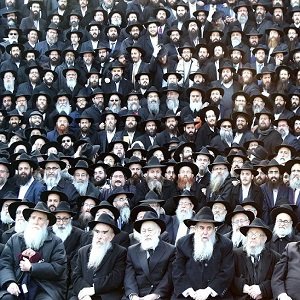 Choosing a Rabbi
 What Is Tzedakah?
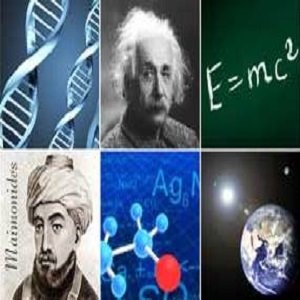 The Science in Torah
 Why Study Torah?
 Afterlife, Moshiach & Redemption
 Your Soul
"The two best days of your life are the day you were born and the day you find out why."
"How long is it our duty to study Torah? Until the day of death." Rambam
Noahide Torah Courses
Noahide Nations has conducted nearly 3000 live online Torah classes over the past 15 years. Many of these classes are available in audio recordings. Here are just some of these courses.
God's Instructions
When God created man on the 6th day He wanted mankind to live in peace and harmony, through His Mercy. He gave Adam 6 instructions in order to live this way. After the flood He gave Noah a 7th. These are the Noahide Commandments.
Read More +
Noahide Prayer
For Noahides, prayer is considered a mitzvah when performed in response to personal needs or circumstances.
Read More +
Develop a Torah Personality
Help for perfecting your relationship with HaShem and yourself.

Read More +
Listen To Noahide Laws & Life Cycle Class
Listen to the overview from a previous class from the Noahide Torah Study Yeshiva Course.
Read More +
Seek Torah Wisdom
Torah wisdom should always flow through you. Learn about Hashem and you will learn about yourself!
Read More +
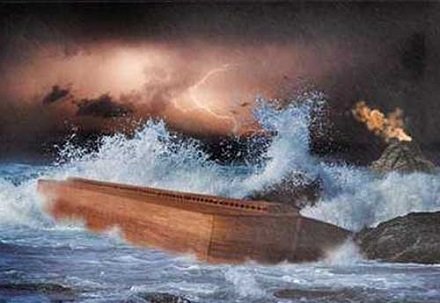
After The Flood
Ever wonder what happened when Noah and his family exited the Ark after the Flood?
"To the world you might be one person, but to one person you just might be the world".
"Tzedaka may not save us, but it makes us worth saving"
"The only thing necessary for evil to exist is for good people to do nothing."
Wisdom From Pirke Avot
Simon the Just…used to say,
“Upon three things the world stands:
On Torah, on (Divine) Service, and on Deeds of Lovingkindness.”
Pirke Avot 1:2
Ben Zoma said,
“Who is wise? The one who learns from all people…
“Who is mighty? The one who subdues the evil inclination…
“Who is rich? The one who rejoices in his portion….
“Who is honored? The one who honors other human beings….”
Pirke Avot 4:1
The Most Important Part of Studying Torah
The most important element in validating interpretations of the written and oral Torah is the concept of Mesorah. Mesorah is the greatest proof to the authenticity of any concept, practice, or interpretation.
Although the seven Noahide laws have their origins in Adam and Noah, God chose to transmit and preserve them via Moses and the giving of the Torah at Sinai. This placed the Seven Mitzvos within the structure and system of Torah study and learning. Therefore, the seven Noahide laws must be interpreted and understood within the context of the Torah.
This point cannot be stressed enough: Jewish, and therefore Noahide, study and interpretation of the Torah is unique and unlike the study of any other religious texts.
The Truth About the Ger
Don't ever be afraid of seeking truth or speaking the truth, as it says in
Proverbs 12:19...
Truthful lips will be established forever, But a lying tongue is only for a moment
Are Noahides Allowed to Pray?
For Noahides, prayer is considered a mitzvah when performed in response to personal needs or circumstances. If one experiences challenges for which he does not pray, his lack of response is tantamount to a denial of God as the sovereign ruler of all things and all events. When one does pray in such circumstances, it demonstrates reliance and belief in the Creator.
When a Noahide prays to give thanks or praise absent a personal need, he still receives reward for such prayer even though it is not of the same nature as prayer prompted by personal needs.
As with all personal prayers, there are no fixed texts for Noahide prayer. Since all Noahide prayer is essentially personal prayer, it is ideally expressed using sincere words from the heart.
Tools For Noahide Torah Study
The journey of Noahide Torah study is endless in depth and has no destination. You will realize this when your very essence proclaims, "the more I learn, the less I know"! Before you make this proclamation remember that it is a mitzvot for a Noahide to study the Noahide Laws and apply them in every aspect of their life. After you make that proclamation you will realize and appreciate why it is a mitzvot for a Noahide to study the Noahide Laws and apply them. The study of Torah is what gives us our awe of the Creator. The more we study the more awe we gain.
The Idolatry Mitzvah in Eden
- Category: Noahide Laws
- Hits: 8125
2014 Class on Noahide Laws by Rabbi Zvi Aviner
Know your CREATOR, know yourself, and know the difference
The IDOLATRY Commandment in Eden
1: Is IDOLATRY still relevant?
We start learning about the First Noahide Commandment, IDOLATRY. As we said last class, it was given to ADAM and Eve in Eden, among the ‘Six Primordial Commandments’: IDOLATRY, ADULTERY, BLOODSHED, THEFT, JUSTICE, BLASPHEMY. At the end of these classes you’ll know them by heart,
Is IDOLATRY still relevant?
Before we plunge into the study of IDOLATRY, we should ask: Is it still relevant to our lives?
The following story depicts the issue. Several years ago when I published my first book about IDOLATRY, I sent the manuscript to the publisher for reviewing. Who will be interested in this? Who would buy your book?”
And I am happy to admit that in one aspect she was right. We don’t’ worship idols of wood and stone anymore, nor do we bow to the Sun and the Moon and all the Celestial bodies. The prophet of Israel has eradicated this sort of foolishness from the human mind. Even nations in the Far East who apparently still worship their idols, are only carrying their parental tradition. They do not believe anymore in their idols’ power.
Moreover, the young editor was right in the public’s declining interest in IDOLATRY. The ancients used to converse much about their idols. They used to exchange notes at bonfire and by the dinner tables. Strangers used to tell each other about their different deities. “Tell me about your god: What do you do for it? How do you worship it? And I’ll tell you about mine.” The Pantheon was large and a person could adopt or choose idols as pleased. This sort of passion for IDOLATRY is passé. So the young editor was right: Who would buy my book?
Modern idols
Yet we do have our own modern idols. What is an idol, after all, if not something or someone that we adore and worship, instead of our true CREATOR?
Do we not surrender our lives to drug and alcohol?
Do not enthrone on us certain political parties or their leaders or their philosophies?
Do we not pursue wealth and power?
Do we not adore Science and Technology, believing they can solve all our problems?
Do we not pursue Art, forgetting morality?
Do we not worship our ‘self’ instead of our CREATOR?
Hence in that aspect, the cute young editor was wrong. IDOLATRY TO ITS KIND is very much with us. They study of IDOLATRY is very much relevant to our modern life.
2: IDOLATRY in the Garden of Eden
What constitutes IDOLATRY?
As we’ve said, Adam received it in Eden. Then Adam ‘carried’ the obligation to Earth. In Eden IDOLATRY meant one thing, and on Earth it has taken on a different connotation.
What did IDOLATRY mean to Adam in Eden?
Surely Adam and Eve would not carve out statues of wood and stone in Eden and worship them. Surely they would not bow in Eden to the Sun and the Moon and worship them. They lived too close to the CREATOR to make such a gross mental error.
But they could violate IDOALTRY in one way only: by disobeying G-d’s Command.
Let’s recall that when the CREATOR formed the Adam in Eden from dust, it says:
“And He (G-d) commanded on the Adam, saying: from all the Tree of the Garden you can eat, but from the Tree of Knowledge of Good and Evil you should not eat, since on the day that you eat it you’ll die!”
Here the words “Commanded on the Adam” are superfluous. The Rabbis saw that as a hint for giving Adam the Six Commandments. Foremost among them was IDOLATRY, which simply says: Listen to your CREATOR’S Commands. Then G-d ‘filled’ the IDOLATRY Commandment with content by saying: “From this Tree you should not eat.”
Listen to me!
Let’s note that this was not an ADVICE, but rather a COMMAND.
Who may issue a Command? Someone with authority. Hence in Eden the CREATOR ‘commanded’ on Adam not only as his MAKER, but also as his FATHER in HEAVENS and his KING, or “The KING OF THE UNIVERSE.”
Note that when we attribute KINGSHIP to G-d we don’t mean to say that He wears a golden crown or ride a beautiful horse. We rather say that He is not an aloof CREATOR but also its King who is interested in his KINGDOM and runs it day and night. He is Our KING who conducts our lives.
Hence the notion of IDOLATRY is intertwined by the notions that He is
Our CREATOR,
Our FATHER
Our KING
who gives us Commandments.
The most primordial specific Command of the FATHER-KING to Adam (and us) was “Thou shall not eat from the fruits of this Tree of Knowledge.”
Indeed, on Rosh Hashanah, when we celebrate Adam’s creation, we refer to G-d as “Our FATHER, OR KING” (avinu makleinu.) On no other day of the year we would use that title in our prayers.
Hence we follow in our study ideas embedded in mainstream Judaism. We do not use esoteric teachings in our classes.
The only commandment relevant to Edenr
Note that in Eden, before the advent of Eve, Adam could have not violated any of the Commandments besides IDOLATRY in its most basic form.
He could not violate ADULTERY without Eve around.
He could not violate BLOODHSED with no other humans around.
He could not violate THEFT without private ownership of many other individuals.
He could not violate INJUSTICE without society.
He could not commit BLASPHEMY while living so close to G-d.
But he could, and did, violate IDOATRY by disobeying the CREATOR-FAHTER-KING Commandment and eat from the forbidden fruit.
Once Eve was born, she could and did commit also ADULTERY by cohabiting with the cunning, sexual attractive Serpent.
IDOALTRY underlies all the Commandments. Whenever we transgress any of G-d’s commandment we violate IDOALTRY as well.
3: IDOLATRY through the Book of Genesis
So far we learned about the basic notions of IDOLATRY from the story of Eden. In Eden, IDOALTRY meant: Listen to your FATHER and KING. But IDOALTRY is more than that. Yet nowhere in the Book of Genesis IDOALTRY is spelled out in details. It is there, of course, operating behind the scene, but nowhere described in the text. Adam knew it, Enosh knew it, Noah knew it, Abraham knew it, and so did Isaac and Jacob and all the righteous people. They all knew it and fought against it. Abraham even sacrificed his life in order to eradicate it. But what are the details of IDOLATRY?
Only in the Book of Exodus it appears again in the text, when G-d gives Israel the Ten Commandments. Let’s see what it says. On that we’ll dwell next class.
-----------------------------------------------------------------------------------------
This article was orignally posted on http://www.noahidesevencommandments.com/default.asp
If you would like to listen Rabbi Zvi Aviner's live class, and see other available classes, click here
To listen to his recorded classes, see them in our store here
Opinions expressed in this article are not necessarily those of Noahide Nations