

 French (FR)
  English (UK)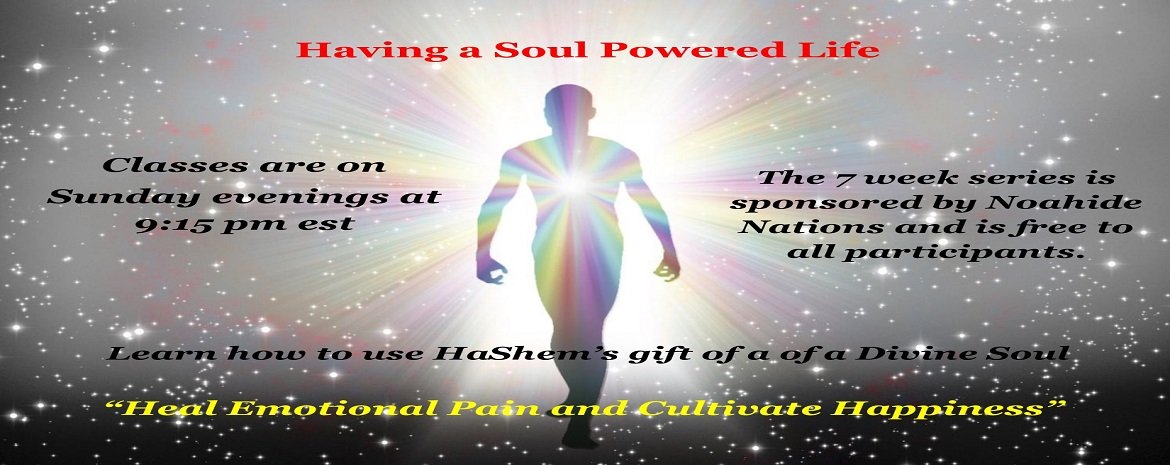




















 Choosing a Rabbi
 What Is Tzedakah?
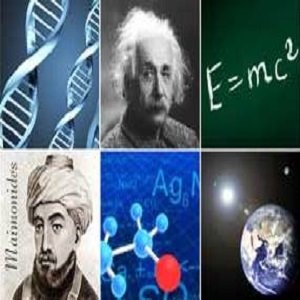 The Science in Torah
 Why Study Torah?
 Afterlife, Moshiach & Redemption
 Your Soul
"The two best days of your life are the day you were born and the day you find out why."
"How long is it our duty to study Torah? Until the day of death." Rambam
Noahide Torah Courses
Noahide Nations has conducted nearly 3000 live online Torah classes over the past 15 years. Many of these classes are available in audio recordings. Here are just some of these courses.
God's Instructions
When God created man on the 6th day He wanted mankind to live in peace and harmony, through His Mercy. He gave Adam 6 instructions in order to live this way. After the flood He gave Noah a 7th. These are the Noahide Commandments.

Read More +
Noahide Prayer
For Noahides, prayer is considered a mitzvah when performed in response to personal needs or circumstances.

Read More +
Develop a Torah Personality
Help for perfecting your relationship with HaShem and yourself.

Read More +
Listen To Noahide Laws & Life Cycle Class
Listen to the overview from a previous class from the Noahide Torah Study Yeshiva Course.

Read More +
Seek Torah Wisdom
Torah wisdom should always flow through you. Learn about Hashem and you will learn about yourself!

Read More +
After The Flood
Ever wonder what happened when Noah and his family exited the Ark after the Flood?
"To the world you might be one person, but to one person you just might be the world".
"Tzedaka may not save us, but it makes us worth saving"
"The only thing necessary for evil to exist is for good people to do nothing."
Wisdom From Pirke Avot
Simon the Just…used to say,
“Upon three things the world stands:
On Torah, on (Divine) Service, and on Deeds of Lovingkindness.”
Pirke Avot 1:2
Ben Zoma said,
“Who is wise? The one who learns from all people…
“Who is mighty? The one who subdues the evil inclination…
“Who is rich? The one who rejoices in his portion….
“Who is honored? The one who honors other human beings….”
Pirke Avot 4:1
The Most Important Part of Studying Torah
The most important element in validating interpretations of the written and oral Torah is the concept of Mesorah. Mesorah is the greatest proof to the authenticity of any concept, practice, or interpretation.
Although the seven Noahide laws have their origins in Adam and Noah, God chose to transmit and preserve them via Moses and the giving of the Torah at Sinai. This placed the Seven Mitzvos within the structure and system of Torah study and learning. Therefore, the seven Noahide laws must be interpreted and understood within the context of the Torah.
This point cannot be stressed enough: Jewish, and therefore Noahide, study and interpretation of the Torah is unique and unlike the study of any other religious texts.
The Truth About the Ger
Don't ever be afraid of seeking truth or speaking the truth, as it says in
Proverbs 12:19...
Truthful lips will be established forever, But a lying tongue is only for a moment
Are Noahides Allowed to Pray?
For Noahides, prayer is considered a mitzvah when performed in response to personal needs or circumstances. If one experiences challenges for which he does not pray, his lack of response is tantamount to a denial of God as the sovereign ruler of all things and all events. When one does pray in such circumstances, it demonstrates reliance and belief in the Creator.
When a Noahide prays to give thanks or praise absent a personal need, he still receives reward for such prayer even though it is not of the same nature as prayer prompted by personal needs.
As with all personal prayers, there are no fixed texts for Noahide prayer. Since all Noahide prayer is essentially personal prayer, it is ideally expressed using sincere words from the heart.
Tools For Noahide Torah Study
The journey of Noahide Torah study is endless in depth and has no destination. You will realize this when your very essence proclaims, "the more I learn, the less I know"! Before you make this proclamation remember that it is a mitzvot for a Noahide to study the Noahide Laws and apply them in every aspect of their life. After you make that proclamation you will realize and appreciate why it is a mitzvot for a Noahide to study the Noahide Laws and apply them. The study of Torah is what gives us our awe of the Creator. The more we study the more awe we gain.
The Language of Respect
- Category: Self Improvement
- Hits: 6778
Quality vs. Achievement
(This article appeared in its original form in The Jewish Press, January 5, 2007)
How do we communicate with words (not demonstrate) our respect toward a child/spouse/loved one? Consider the following: If I asked you to list six qualities your child possesses, would you able to do so with ease? Would you scratch your head – pausing – wondering – trying to figure out which character traits stand out most in your mind? Do you hesitate because your child has so many wonderful traits that it is just too tough to narrow down the list to six? Or perhaps your situation is such that you cannot even think of one attribute. Do your child's behaviors and/or involvement in an abhorrent lifestyle make you feel so sick that you simply remain a blank; you are unable to think of any positive features? What about those negative behaviors – the poor qualities you believe your child possesses, the negative actions s/he demonstrates and the horrible way s/he makes you feel? Try to focus for a moment and think about some of those poor traits s/he displays – are they truly linked to your child's soul? Or are they a part of the acting-out behaviors that are rooted in his/her pain? Don't get me wrong; I am not condoning a disparaging lifestyle or excusing behaviors that are difficult to bear. I am also not suggesting that it is easy to find something positive to say about one's child when s/he is living in a morally unhealthy manner, is disruptive to the household and/or is at the heart of so much of the parents' pain. Getting back to my initial question... If you are having difficulty coming up with the list, do not fret! Some parents share that same challenge. In fact, of those who are able to create an inventory, it's interesting to note how many will point to an achievement or an accomplishment rather than a quality – which brings me to the next thought. What is the difference between the two? Why is this difference a significant issue? And what Torah perspective reflects this point? Let's begin with a general thought about human beings and their needs. People have a need and a desire to be respected and to feel acknowledged. Well, children are people, too, and their need is probably greater than that of adults. What better way to propel a child's self-image and to help a child feel good about him/herself than for parents to share the positive character traits they observe and admire in their child. Statements such as: "I admire your diligence;" "I'm impressed with the self-control you've demonstrated;" or "Your perseverance is to be commended," send a powerful underlying message that lauds the essence of the child. The indirect message we are conveying is: "You possess something distinctive that makes you unique. You have value; you are worthy; you are special. I respect and admire you for who you are deep down, for the soul you possess." This is not to say that pointing to a child's achievement is incorrect or less appropriate. When a child achieves a good outcome (such as a high test grade), of course parents want to shower their child with positive reinforcing words. And why not! Parents enjoy experiencing a joyous pride in their child's achievements and a deserves to hear the melodious tune of admiration.
But what happens when a child is not meeting with success during his/her adolescence? When there are few or no achievements to extol, should the child remain bereft of praise at a time when his/her self-image is low? Does it mean the child does not possess any qualities that define the core of her/his existence? The concept of focusing on a child's positive qualities rather than his/her accomplishments is an idea that is illustrated in the last segment in the Book of Genesis, Parshat Vayechi. When nearing his death, Jacob blesses his children and addresses each of his sons. He points to the most powerful character trait that best describes each son and conveys a specific and personalized message. That message (or bracha- blessing), though, is not Jacob's way of waving a magic wand and pronouncing a prophetic outcome that will come to fruition.
His blessing is an affirmation of the qualities each son possesses and, based on the Medrash Hagadol, an implied message of awareness. The underlying theme is that each blessing has the potential to be fulfilled. However, the outcome is not automatic; it requires purification on the part of the one bearing the blessing. In other words, each son must put forth his efforts and be worthy of the blessing so that the expected outcome will take place as stated in Jacob's blessing. It would seem, then, that an individual's qualities are a vital factor to help fuel his/her achievements. And with this perspective in mind, how do parents discover qualities in a child when they find it extremely challenging to sing the child's praises? One way for parents to assess their child's qualities is for them to observe their child when s/he is involved in an activity, a chore or a project; irrespective of whether the activity was requested by the parents or it was done of the child's own volition. (Parenthetically, I have recommended the following idea to many of my (parent) clients: Depending on your child's interests or talents, and if you can, invite your child to engage in cooking, baking or a small household repair project. The goal, of course, is to find a project where you believe your child will meet with success). Additionally, it is important to keep in mind some Do's and Dont's when putting this tool into effect:
- Do express words of gratitude and appreciation for the efforts that are generated.
- Do focus on the positive efforts that are being generated, not the outcome.
- Do not point to any negative factors (i.e., any incomplete work, the manner in which the task was done or whether or not the job was done properly).
- Do not wait for the completion and/or success of a chore or project; it may not happen.
When parents simply concentrate on the positive efforts their child displays, they can more easily discover the child's strengths. It is at that point that the child's inner being can shine through and speak out amidst the clouded veil that shrouds its beauty.