

 French (FR)
  English (UK)





















 Choosing a Rabbi
 What Is Tzedakah?
 The Science in Torah
 Why Study Torah?
 Afterlife, Moshiach & Redemption
 Your Soul
"The two best days of your life are the day you were born and the day you find out why."
"How long is it our duty to study Torah? Until the day of death." Rambam
Noahide Torah Courses
Noahide Nations has conducted nearly 3000 live online Torah classes over the past 15 years. Many of these classes are available in audio recordings. Here are just some of these courses.
God's Instructions
When God created man on the 6th day He wanted mankind to live in peace and harmony, through His Mercy. He gave Adam 6 instructions in order to live this way. After the flood He gave Noah a 7th. These are the Noahide Commandments.

Read More +
Noahide Prayer
For Noahides, prayer is considered a mitzvah when performed in response to personal needs or circumstances.

Read More +
Develop a Torah Personality
Help for perfecting your relationship with HaShem and yourself.

Read More +
Listen To Noahide Laws & Life Cycle Class
Listen to the overview from a previous class from the Noahide Torah Study Yeshiva Course.

Read More +
Seek Torah Wisdom
Torah wisdom should always flow through you. Learn about Hashem and you will learn about yourself!
Read More +
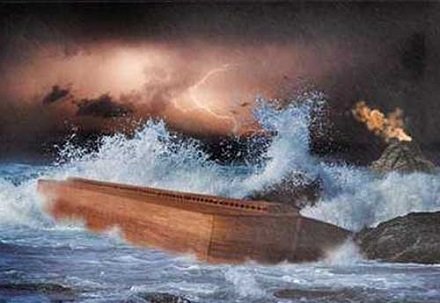
After The Flood
Ever wonder what happened when Noah and his family exited the Ark after the Flood?
"To the world you might be one person, but to one person you just might be the world".
"Tzedaka may not save us, but it makes us worth saving"
"The only thing necessary for evil to exist is for good people to do nothing."
Wisdom From Pirke Avot
Simon the Just…used to say,
“Upon three things the world stands:
On Torah, on (Divine) Service, and on Deeds of Lovingkindness.”
Pirke Avot 1:2
Ben Zoma said,
“Who is wise? The one who learns from all people…
“Who is mighty? The one who subdues the evil inclination…
“Who is rich? The one who rejoices in his portion….
“Who is honored? The one who honors other human beings….”
Pirke Avot 4:1
The Most Important Part of Studying Torah
The most important element in validating interpretations of the written and oral Torah is the concept of Mesorah. Mesorah is the greatest proof to the authenticity of any concept, practice, or interpretation.
Although the seven Noahide laws have their origins in Adam and Noah, God chose to transmit and preserve them via Moses and the giving of the Torah at Sinai. This placed the Seven Mitzvos within the structure and system of Torah study and learning. Therefore, the seven Noahide laws must be interpreted and understood within the context of the Torah.
This point cannot be stressed enough: Jewish, and therefore Noahide, study and interpretation of the Torah is unique and unlike the study of any other religious texts.
The Truth About the Ger
Don't ever be afraid of seeking truth or speaking the truth, as it says in
Proverbs 12:19...
Truthful lips will be established forever, But a lying tongue is only for a moment
Are Noahides Allowed to Pray?
For Noahides, prayer is considered a mitzvah when performed in response to personal needs or circumstances. If one experiences challenges for which he does not pray, his lack of response is tantamount to a denial of God as the sovereign ruler of all things and all events. When one does pray in such circumstances, it demonstrates reliance and belief in the Creator.
When a Noahide prays to give thanks or praise absent a personal need, he still receives reward for such prayer even though it is not of the same nature as prayer prompted by personal needs.
As with all personal prayers, there are no fixed texts for Noahide prayer. Since all Noahide prayer is essentially personal prayer, it is ideally expressed using sincere words from the heart.
Tools For Noahide Torah Study
The journey of Noahide Torah study is endless in depth and has no destination. You will realize this when your very essence proclaims, "the more I learn, the less I know"! Before you make this proclamation remember that it is a mitzvot for a Noahide to study the Noahide Laws and apply them in every aspect of their life. After you make that proclamation you will realize and appreciate why it is a mitzvot for a Noahide to study the Noahide Laws and apply them. The study of Torah is what gives us our awe of the Creator. The more we study the more awe we gain.
Age of the Universe Part 2
- Category: Articles
- Hits: 6147
Day One and Not a First Day: Seeing time from the beginning
 Now the fact that the Bible tells us there is “evening and morning Day One”, comes to teach us time from a Biblical perspective, from near the beginning looking forward.
If the Torah were seeing time from the days of Moses on Mount Sinai – 2448 years after Adam – the text would not have written Day One. Because by Sinai, hundreds of thousands of days already passed. It would have said “a first day.” By the second day of Genesis, the Bible says “a second day,” because there was already the first day with which to compare it.
We look back in time, and say the universe is 14 billion years old. But as every scientist knows, when we say the universe is 14 billion years old, there’s another half of the sentence that we rarely bother to say. The other half of the sentence is: The universe is 14 billion years old as seen from the time-space coordinates of the earth.

The key is that the Torah looks forward in time, from very different time-space coordinates, when the universe was small. Since then, the universe has expanded out. Space stretches, and that stretching of space totally changes the perception of time. Imagine in your mind going back billions of years to the beginning of time. Now pretend way back at the beginning of time, when time grabs hold, there’s an intelligent community. (It’s totally fictitious.) Imagine that the intelligent community has a laser, and it’s going to shoot out a blast of light every second. Every second — pulse. Pulse. Pulse. And on each pulse of light the following formation is printed (printing information on light, electro-magnetic radiation, is common practice): “I’m sending you a pulse every second.” Billions of years later, way far down the time line, we here on Earth have a big satellite dish antenna and we receive that pulse of light. And on that pulse of light we read “I’m sending you a pulse every second.”
Light travels 300 million meters per second. So at the beginning, the two light pulses are separated by a second of travel or 300 million meters. Now they travel through space for billions of years until they reach the Earth. But wait a minute. Is the universe static? No. The universe is expanding. The universe expands by space stretching. So as these pulses travel through space for billions of years, space is stretching. What’s happening to these pulses? The space between them is also stretching. So the pulses get further and further apart. Billions of years later, when the first pulse arrives, we read on it “I’m sending you a pulse every second.” A message from outer space. You call all your friends, and you wait for the next pulse to arrive. Does it arrive second later? No! A year later? Maybe not. Maybe billions of years later. Because the amount of time this pulse of light has traveled through space will determine the amount of space stretching that has occurred, and so how much space and therefore how much time there will be between the arrival of the pulses. That’s standard cosmology.
14 Billion Years or Six Days?
 Today, we look back in time and we see approximately 14 billion years of history. Looking forward from when the universe is very small – billions of times smaller – the Torah says six days. In truth, they both may be correct. What’s exciting about the last few years in cosmology is we now have quantified the data to know the relationship of the “view of time” from the beginning of stable matter, the threshold energy of protons and neutrons (their nucleosynthesis), relative to the “view of time” today. It’s not science fiction any longer. A dozen physics textbooks all bring the same number. The general relationship between nucleosynthesis, that time near the beginning at the threshold energy of protons and neutrons when matter formed, and time today is a million million. That’s a 1 with 12 zeros after it. So when a view from the beginning looking forward says “I’m sending you a pulse every second,” would we see a pulse every second? No. We’d see it every million million seconds. Because that’s the stretching effect of the expansion of the universe.
The Talmud tells us that the soul of Adam was created at five and a half days after the beginning of the six days. That is a half day before the termination of the sixth day. At that moment the cosmic calendar ceases and an earth based calendar starts. The logic for the Talmud choosing the 5 and a half days (and not the total six days) is that the creation of the Adam, Genesis 1:27, is half way through the number of verses in the sixth day of Genesis. How would we see those days stretched by a million million? Five and a half days times a million million, gives us five and a half million million days. Dividing that by 365 days in a year, that comes out to be 15 billion years. NASA gives a value of 13.7 billion years. Considering the many approximations, and that the Bible works with only six periods of time, the agreement to within a few percent is extraordinary. The universe is billions of years old from one perspective and a mere six days old from another. And both are correct!
The amount of the 14 billion years compressed within each of the five and a half days of Genesis is not of equal duration. Each time the universe doubles in size, the perception of time halves as we project that time back toward the beginning of the universe. The rate of doubling, that is the fractional rate of change, is very rapid at the beginning and decreases with time simply because as the universe gets larger and larger, even though the actual expansion rate is approximately constant, it takes longer and longer for the overall size to double. Because of this, the earliest of the six days have most of the15 billion years sequestered with them. For the duration of each day and the details of how that matches with the measured history of the universe and the earth, see my book The Science of God.
CORRECTION TO THE CALCULATION OF THE AGE OF THE UNIVERSE
Following a talk I gave at AZUSA Pacific University, February 2011, a participant noted that when calculating the expansion ratio of space [that is, by what fraction space had stretched] from the era of nucleosynthesis to our current time, I had neglected to correct for the effect that the increase in the rate of universal expansion has on the current cosmic microwave radiation background. This increase introduces a non-linear effect. [That is, the rate of expansion is not constant, rather the rate is increasing.] The correction is in the order of 10%. Had the expansion been linear [and not super-linear resulting from the increased rate], the CMRB would be, not the currently observed 2.76 K, but 3.03 K. Introducing this correction into the exponential equation that details the duration of the 5 and a half 24 hour days of Genesis Chapter One results in an age of the universe from our perspective of 14 billion years [14, 000,000,000 years]. From the Bible’s perspective of time for those six evocative days of Genesis, the number of our years held compressed within each of those six 24 hour days of Genesis, starting with Day One, would be, in billions of years, respectively, 7.1; 3.6; 1.8; 0.89; 0.45; 0.23.
Reprinted with permission of Dr. Gerald Schroeder from http://geraldschroeder.com
Opinions expressed in this article are not necessarily those of Noahide Nations