
 French (FR)
  English (UK)

















 Choosing a Rabbi
 What Is Tzedakah?
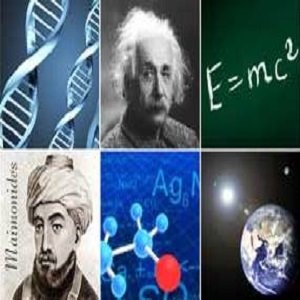 The Science in Torah
 Why Study Torah?
 Afterlife, Moshiach & Redemption
 Your Soul
"The two best days of your life are the day you were born and the day you find out why."
"How long is it our duty to study Torah? Until the day of death." Rambam
Noahide Torah Courses
Noahide Nations has conducted nearly 3000 live online Torah classes over the past 15 years. Many of these classes are available in audio recordings. Here are just some of these courses.
God's Instructions
When God created man on the 6th day He wanted mankind to live in peace and harmony, through His Mercy. He gave Adam 6 instructions in order to live this way. After the flood He gave Noah a 7th. These are the Noahide Commandments.

Read More +
Noahide Prayer
For Noahides, prayer is considered a mitzvah when performed in response to personal needs or circumstances.
Read More +
Develop a Torah Personality
Help for perfecting your relationship with HaShem and yourself.

Read More +
Listen To Noahide Laws & Life Cycle Class
Listen to the overview from a previous class from the Noahide Torah Study Yeshiva Course.

Read More +
Seek Torah Wisdom
Torah wisdom should always flow through you. Learn about Hashem and you will learn about yourself!

Read More +
After The Flood
Ever wonder what happened when Noah and his family exited the Ark after the Flood?
"To the world you might be one person, but to one person you just might be the world".
"Tzedaka may not save us, but it makes us worth saving"
"The only thing necessary for evil to exist is for good people to do nothing."
Wisdom From Pirke Avot
Simon the Just…used to say,
“Upon three things the world stands:
On Torah, on (Divine) Service, and on Deeds of Lovingkindness.”
Pirke Avot 1:2
Ben Zoma said,
“Who is wise? The one who learns from all people…
“Who is mighty? The one who subdues the evil inclination…
“Who is rich? The one who rejoices in his portion….
“Who is honored? The one who honors other human beings….”
Pirke Avot 4:1
The Most Important Part of Studying Torah
The most important element in validating interpretations of the written and oral Torah is the concept of Mesorah. Mesorah is the greatest proof to the authenticity of any concept, practice, or interpretation.
Although the seven Noahide laws have their origins in Adam and Noah, God chose to transmit and preserve them via Moses and the giving of the Torah at Sinai. This placed the Seven Mitzvos within the structure and system of Torah study and learning. Therefore, the seven Noahide laws must be interpreted and understood within the context of the Torah.
This point cannot be stressed enough: Jewish, and therefore Noahide, study and interpretation of the Torah is unique and unlike the study of any other religious texts.
The Truth About the Ger
Don't ever be afraid of seeking truth or speaking the truth, as it says in
Proverbs 12:19...
Truthful lips will be established forever, But a lying tongue is only for a moment
Are Noahides Allowed to Pray?
For Noahides, prayer is considered a mitzvah when performed in response to personal needs or circumstances. If one experiences challenges for which he does not pray, his lack of response is tantamount to a denial of God as the sovereign ruler of all things and all events. When one does pray in such circumstances, it demonstrates reliance and belief in the Creator.
When a Noahide prays to give thanks or praise absent a personal need, he still receives reward for such prayer even though it is not of the same nature as prayer prompted by personal needs.
As with all personal prayers, there are no fixed texts for Noahide prayer. Since all Noahide prayer is essentially personal prayer, it is ideally expressed using sincere words from the heart.
Tools For Noahide Torah Study
The journey of Noahide Torah study is endless in depth and has no destination. You will realize this when your very essence proclaims, "the more I learn, the less I know"! Before you make this proclamation remember that it is a mitzvot for a Noahide to study the Noahide Laws and apply them in every aspect of their life. After you make that proclamation you will realize and appreciate why it is a mitzvot for a Noahide to study the Noahide Laws and apply them. The study of Torah is what gives us our awe of the Creator. The more we study the more awe we gain.
What is Torah?
- Category: Noahide Laws
- Hits: 5063
When the word Torah is used it is meant in several ways. These different meanings often create some amount of confusion to the uninitiated. The confusion disappears the better one understands what is meant by Torah and when and how these different meanings ought to be applied. When we speak of Torah we might mean it one of several ways. The first way refers specifically to the first five books of Moses (Genesis through Deuteronomy). Another way is to speak of the oral Torah. At Mt. Sinai God gave the children of Israel two Torahs, a written Torah and an oral Torah. Although the written Torah tells the Jewish people what they should do; it is often unclear how they should do it. Part of the difficulty of how to do something is by not understanding the meaning of words. When the Torah says,
"...the seventh day is the Sabbath of the Lord thy God; in it thou shalt do no labor" (Exodus 20:10).
The question is "what does the word "labor" mean?" How do we define labor to know what actions we should not do to avoid breaking this commandment?
"The basic task of the oral law, therefore, was to transmit the meaning of words" (The Essential Talmud, 11).
Only with the oral Torah is it possible to understand labor in its original meaning, the meaning that existed at Mt. Sinai. Those that do not possess this knowledge are forced to make up their own oral Torah to determine what is considered labor. Although many would claim that the oral Torah is an invention of the Rabbis. Anyone that actually tries to keep the Torah is forced, in some way, to create their own oral Torah. Even groups like the Kairites, people who claim only the written Torah is from God, are forced to invent their own oral tradition. It is clear, then, that the Jewish people's claim of an oral Torah is not unfounded or unreasonable. This oral Torah is just as important to gentiles as it is to the Jewish people since it is the oral Torah that tells us, specifically, about the Noahide Laws. If we are studying any of the other parts of the Hebrew Scriptures (Tanach), Torah, Prophets, and Writings; this is also called studying Torah. This is because the Tanach either explains or gives us examples of the Torah in action. Therefore, the Prophets and Writings support and do not contradict the Torah. The Tanach aids the student of the Torah in seeing practical applications of their commandments. The final way that Torah is meant is to refer to anything that helps expand our understanding of God's Torah. Whether we study astronomy or physics, or even philosophy if this study is meant to aid in our understanding and appreciation of Torah it too is called studying Torah. As we see Torah is meant in four ways. It is meant as written Torah, Oral Torah, Tanach, and finally as secular matters studied for the sake of understanding Torah. This clarity on the use of the word Torah will aid the Torah student in future studies. When reading the word Torah it is important to determine which of these definitions is meant. NEXT: Now that we have defined Torah we need to define an equally useful term "halachah."