

 French (FR)
  English (UK)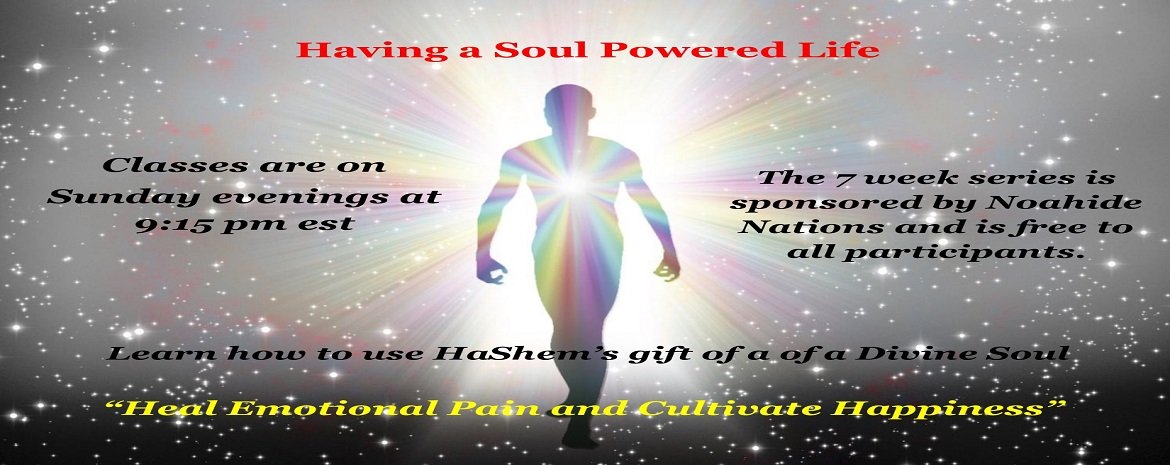

















 Choosing a Rabbi
 What Is Tzedakah?
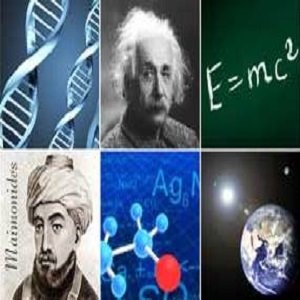 The Science in Torah
 Why Study Torah?
 Afterlife, Moshiach & Redemption
 Your Soul
"The two best days of your life are the day you were born and the day you find out why."
"How long is it our duty to study Torah? Until the day of death." Rambam
Noahide Torah Courses
Noahide Nations has conducted nearly 3000 live online Torah classes over the past 15 years. Many of these classes are available in audio recordings. Here are just some of these courses.
God's Instructions
When God created man on the 6th day He wanted mankind to live in peace and harmony, through His Mercy. He gave Adam 6 instructions in order to live this way. After the flood He gave Noah a 7th. These are the Noahide Commandments.
Read More +
Noahide Prayer
For Noahides, prayer is considered a mitzvah when performed in response to personal needs or circumstances.

Read More +
Develop a Torah Personality
Help for perfecting your relationship with HaShem and yourself.

Read More +
Listen To Noahide Laws & Life Cycle Class
Listen to the overview from a previous class from the Noahide Torah Study Yeshiva Course.
Read More +
Seek Torah Wisdom
Torah wisdom should always flow through you. Learn about Hashem and you will learn about yourself!

Read More +
After The Flood
Ever wonder what happened when Noah and his family exited the Ark after the Flood?
"To the world you might be one person, but to one person you just might be the world".
"Tzedaka may not save us, but it makes us worth saving"
"The only thing necessary for evil to exist is for good people to do nothing."
Wisdom From Pirke Avot
Simon the Just…used to say,
“Upon three things the world stands:
On Torah, on (Divine) Service, and on Deeds of Lovingkindness.”
Pirke Avot 1:2
Ben Zoma said,
“Who is wise? The one who learns from all people…
“Who is mighty? The one who subdues the evil inclination…
“Who is rich? The one who rejoices in his portion….
“Who is honored? The one who honors other human beings….”
Pirke Avot 4:1
The Most Important Part of Studying Torah
The most important element in validating interpretations of the written and oral Torah is the concept of Mesorah. Mesorah is the greatest proof to the authenticity of any concept, practice, or interpretation.
Although the seven Noahide laws have their origins in Adam and Noah, God chose to transmit and preserve them via Moses and the giving of the Torah at Sinai. This placed the Seven Mitzvos within the structure and system of Torah study and learning. Therefore, the seven Noahide laws must be interpreted and understood within the context of the Torah.
This point cannot be stressed enough: Jewish, and therefore Noahide, study and interpretation of the Torah is unique and unlike the study of any other religious texts.
The Truth About the Ger
Don't ever be afraid of seeking truth or speaking the truth, as it says in
Proverbs 12:19...
Truthful lips will be established forever, But a lying tongue is only for a moment
Are Noahides Allowed to Pray?
For Noahides, prayer is considered a mitzvah when performed in response to personal needs or circumstances. If one experiences challenges for which he does not pray, his lack of response is tantamount to a denial of God as the sovereign ruler of all things and all events. When one does pray in such circumstances, it demonstrates reliance and belief in the Creator.
When a Noahide prays to give thanks or praise absent a personal need, he still receives reward for such prayer even though it is not of the same nature as prayer prompted by personal needs.
As with all personal prayers, there are no fixed texts for Noahide prayer. Since all Noahide prayer is essentially personal prayer, it is ideally expressed using sincere words from the heart.
Tools For Noahide Torah Study
The journey of Noahide Torah study is endless in depth and has no destination. You will realize this when your very essence proclaims, "the more I learn, the less I know"! Before you make this proclamation remember that it is a mitzvot for a Noahide to study the Noahide Laws and apply them in every aspect of their life. After you make that proclamation you will realize and appreciate why it is a mitzvot for a Noahide to study the Noahide Laws and apply them. The study of Torah is what gives us our awe of the Creator. The more we study the more awe we gain.
Go to Yourself!
- Category: Articles
- Hits: 5816
Lech Lecha(Genesis 12-17)
Go to Yourself
"A fisherman was sitting by the river fishing. Along came a wealthy man and watched with amazement as every few minutes he would reel in another fairly large fish. After only an hour, the fisherman began to pack up and leave.
The wealthy man ran over to him asked, "Why are you leaving so soon?"
"Well," said the fisherman, I've caught enough fish to last me for the week and I don't need any more. Now I'm going home to study Torah and spend time with my family."
"But think of what you could do with more fish," the wealthy man implored. "You could sell the extra fish, use the money to invest in more fishing rods, then you could buy a boat and hire other people to do the fishing – while you supervise the operation."
"And what is the goal of all this?" asked the fisherman.
"Well," replied the wealthy man, "you could then hire someone to manage your business and retire to do what you really want in life."
With that, the fisherman bid the wealthy man goodbye and said, "Thank you very much, but I'm doing that already!""
Idols 'R Us
The point of this story is that sometimes we get so caught up in producing, achieving and becoming successful, that we may never stop to ask, "What is life all about? What am I really living for?"
This week's parsha tells the story of Abraham. When he was three years old, Abraham observed the world of nature with all its perfection, beauty, symmetry, precision, timing, balance, integration, coordination, unity -- and he concluded that for a world so perfectly designed, there must be an intelligent designer. Abraham had discovered God.
On the surface, this conclusion is not so amazing. Take any three-year-old to a toy factory and show him the process of design, manufacture and assembly. Would he mistakenly think these toys are produced by accident?!
What is so unique about Abraham's discovery, however, is that he lived in a world steeped in idolatry. Idolatry is a counterfeit attempt to satisfy the basic human need to connect to a dimension beyond ourselves. For some, this means carving a statue of Buddha; for others, it's owning a new Mercedes. During Abraham's time, everyone had an idol.
Abraham's discovery is all the more remarkable given that his family owned and operated a successful idol store. One day, when Abraham was asked to watch the store, he took a hammer and smashed all the idols -- except for the largest. His father came home aghast. "What happened?!" he shouted. "It was amazing, Dad," replied Abraham. "The idols all got into a fight and the biggest idol won!" There was no way for his father to respond; deep down he knew that Abraham had tuned into a deeper truth.
Abraham continued his effort to convince others. He brought guests into his tent, which was open on all four sides and pitched right in the middle of an inter-city highway. Abraham also authored a 400-chapter book refuting idolatry. And he endured all types of mockery and persecution for holding beliefs that were, to say the least, politically incorrect. Nimrod, as the most powerful world leader of the time, was the one most threatened by Abraham's ideas of a supreme God. So Nimrod threw Abraham into a fiery furnace, saying "Let's see your God save you now." Abraham emerged unscathed.
In fact, the Torah calls him Avraham Ha-Ivri -- Abraham the Hebrew. Ha-Ivri translates literally as "the one who stands on the other side." The entire world stood on one side, with Abraham standing firm on the other.
Break Away
What was the secret of Abraham's incredible strength, and how can we integrate this lesson into our lives today?
The answer is found in the first verse of the parsha. God appears to Abraham and says: "Go to yourself ("Lech Lecha") -- away from your country, your relatives, and your father's house." God is telling Abraham that in order to become truly great, he must "cut the umbilical chord," and embark on a journey of growth and self-discovery -- away from the familiar routine.
We get stuck in a rut of peer pressure. Old friends. Old habits. Overbearing parents. When I was growing up, a certain friend always wanted to be a lawyer. But his parents wanted him to be a doctor, so they could say, "My son the doctor." He insisted on becoming a lawyer, they insisted he become a doctor. The pressure became so great that he went through 10 years of medical school just to satisfy his parents. (Upon completion, he went to law school, then combined the two fields and became a malpractice attorney.) But the point is that he didn't have the strength to break away and live his own life.
The first question we each must ask is: Where does my "life philosophy" stem from? Is it essentially a Greek approach to life? Roman? Eastern? Jewish? Try asking yourself the following question: "If I had been born into a family of Muslim fundamentalists in Iran, what would I be doing with my life today?" Because if you don't grapple with this question, then chances are quite good you'd be a Muslim fundamentalist!
As God told Abraham: "Go to yourself -- away from your country, your relatives, and your father's house." Not to automatically reject society's values. But to intelligently examine their merit.
Self Exploration
Everyone -- without exception -- has to go through this process.
A famous rabbi once revealed to me the secret of his greatness. He said: "My grandfather founded one of the biggest yeshivas of modern time. And my father succeeded him as head of the yeshiva. Growing up, I was surrounded by the very best that Judaism could offer. I studied with top scholars, I had access to immense libraries of Torah books, and I grew up in a home that was the center of Jewish communal life. I had it all. But at the same time, I felt like it wasn't mine. I had been given it, but I hadn't acquired it."
He continued: "So when I was 18, I made a decision to undergo a thorough process of self-examination. I took all of Jewish thought and practice, and emptied myself of it -- metaphorically. I did not stop observing the mitzvahs. But intellectually, I put everything on the table so I could look at it. I looked at Shabbos, for example, and asked myself: What is this? How do I relate to it? What aspects do I appreciate, and which aspects don't I understand?"
A complete relationship with God requires both an intellectual and emotional connection. "Knowledge of God without feeling" leaves a person disconnected and cold. On the other hand, "feeling without knowledge" has been the basis for every historical cult, false religion and demagoguery.
Given the multitude of "spiritual paths" clamoring for our attention (combined with the human tendency to settle for half-truths and comfortable compromises to tough questions), Judaism instructs us to approach spirituality also as an intellectual inquiry. In the "Aleynu" prayer, we recite: "Know this day, and consider it in your heart, that the Lord is God..." "Know this day" is the first, intellectual step. But it must be joined by the emotional realization of "consider it in your heart."
This rabbi continued: "I needed to grow up and become my own person. I repeated this process with all realms of Torah. It took years. But now my convictions are strong and unshakeable. I know who I am, and more importantly, why."
To Life!
A key to maturity is going through this process. Perhaps this is how the tradition began in America of going away for four years to university. It gives young people the flexibility to experiment with different ideas and lifestyles, without having to be under the constant scrutiny of family and friends. It is an opportunity to discover who we really are. (Tragically, however, those four years are often spent more on partying than on serious self-examination.)
In our parsha, God suggests to Abraham where, as a Jew, he can experience this best: Israel. As well for Jews today, one visit to Israel is often transformational. There is a historical, spiritual weightiness about the land that puts life into perspective.
Maybe you'll say, "I don't have the time," or "I'm too old." The rabbis point out that the Hebrew word for "life" -- chaim -- always appears in the plural form. This is because life is a continuous process of self-discovery. It is never too late. And now is the perfect time.
The Sfas Emes (19th century Europe) says that God tells each one of us "Lech Lecha" -- go to yourself. Abraham heard the call. Hopefully, we will, too.
Read more at: http://www.aish.com/tp/b/sw/Go-to-Yourself.html
Opinions expressed in this article are not necessarily those of Noahide Nations